OpenArt AI Creator Studio is worth considering in 2026 for its robust image and video generation capabilities, offering a flexible creative sandbox for digital artists and marketers alike. It stands out with its wide array of AI models and a user-friendly interface for generating diverse visual content, making it a powerful tool for various creative endeavors. However, potential users should carefully weigh its credit-based system and occasional generation inconsistencies against their specific creative needs and budget constraints.
OpenArt AI Creator Studio functions as a comprehensive creative hub, leveraging various advanced AI models to transform text prompts and user inputs into unique, high-quality visual assets. This platform is designed to empower creators with sophisticated artificial intelligence tools for generating both static images and dynamic video content, streamlining the creative process.
Looking for more AI tools? Explore 500+ ranked options at top10k.com before deciding.
To fully understand OpenArt's comprehensive value proposition, this review will delve into its core features, analyze its distinct pros and cons, assess its detailed pricing structure, and examine real user feedback to help determine if it aligns with your specific creative workflow and investment strategy for 2026.
What is OpenArt AI Creator Studio, and What Does It Offer?
OpenArt AI Creator Studio is a versatile platform serving as a powerful, AI-driven tool for generating both images and videos, designed to make complex AI art accessible to a broad audience, encompassing digital artists, designers, and content creators. Its primary function allows users to create unique visual content from simple text descriptions, offering a flexible creative environment for diverse applications. This studio integrates a wide range of AI models, enabling highly diverse outputs tailored to specific creative visions and project requirements.
To further elaborate on its comprehensive capabilities, OpenArt positions itself as a dynamic creative sandbox, providing tools that extend far beyond basic image generation. It aims to streamline the entire content creation process, from initial concept development to the final output, by offering various customization options, advanced control mechanisms, and iterative design capabilities crucial for professional-grade work.
What are the core features of OpenArt?
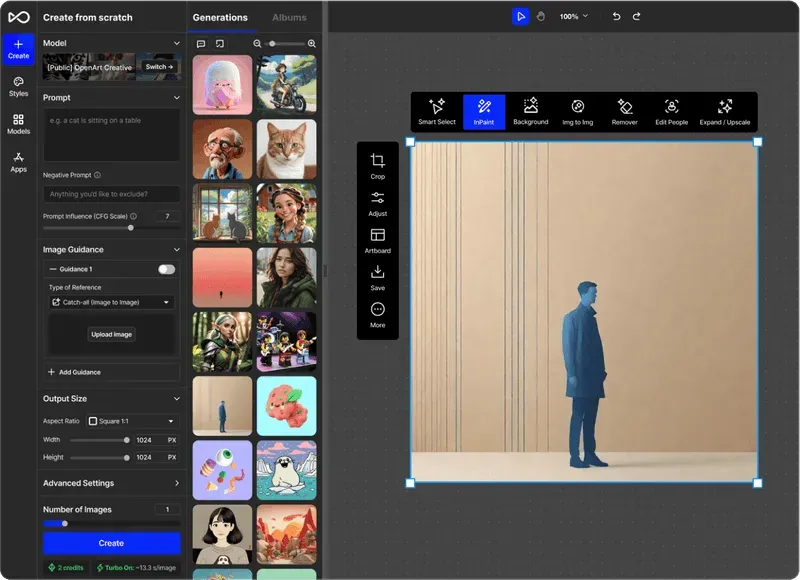
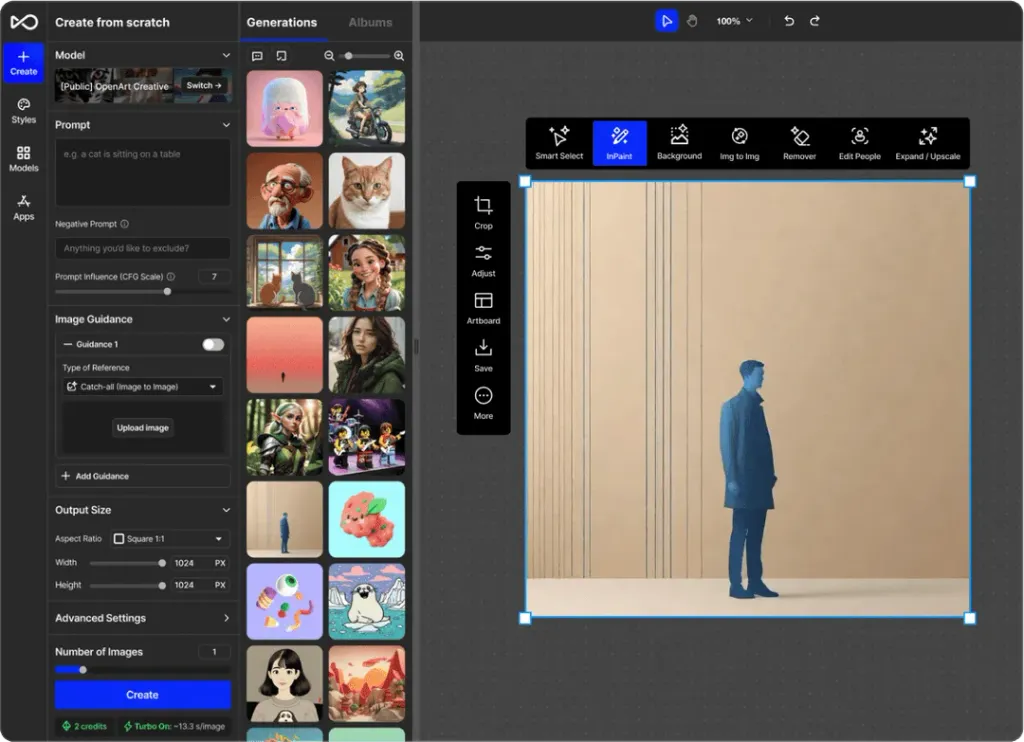
The core features of OpenArt encompass advanced image and video generation, offering users a flexible creative sandbox to bring their ideas to life with sophisticated artificial intelligence tools. Users can leverage a vast library of AI models, fine-tune prompts with precision, and iterate on designs efficiently, making it suitable for a wide range of creative projects from marketing campaigns to personal art.
<img src="https://example.com/openart-features.jpg" alt="Screenshot of OpenArt AI Creator Studio interface showing various generation options and model selection" caption="OpenArt's interface highlights its diverse features, including model selection and prompt input for generating AI art.">
Specifically, OpenArt provides several key functionalities that enhance its utility for creators:
- Diverse Image Generation: Users can generate high-quality images across an extensive spectrum of styles, models, and artistic directions, ranging from photorealistic renderings to abstract compositions. The platform supports various aspect ratios and resolutions, allowing for versatile applications in digital media, print, and web design. This flexibility ensures that creators can produce visuals perfectly suited for their intended platform and audience, whether for social media, website headers, or detailed illustrations.
- Video Generation: Beyond static images, OpenArt allows for the creation of short, dynamic video clips, transforming conceptual ideas into engaging visual stories. This feature is particularly valuable for social media content creators, digital marketers, and animators looking for innovative ways to produce engaging visuals without extensive video production expertise. It enables the rapid prototyping of video content, facilitating quick iterations and adjustments based on creative feedback.
- Extensive Model Library and Customization: OpenArt boasts access to over 200 distinct AI models, including industry-leading options like Stable Diffusion, Midjourney, and DALL-E 3, alongside several exclusive models developed specifically for the platform. This extensive selection provides unparalleled opportunities for highly specialized outputs and broad creative exploration, allowing users to experiment with different aesthetic qualities and technical capabilities.
- Image Upscaling and Editing: The platform includes integrated tools for enhancing generated images, such as upscaling resolutions without compromising quality, which is essential for professional printing or high-definition digital displays. Additionally, basic editing features are available to refine outputs, allowing for minor adjustments and improvements directly within the OpenArt environment, reducing the need for external software.
- Advanced Prompt Engineering Tools: OpenArt offers sophisticated prompt editing capabilities, negative prompting to exclude undesired elements, and prompt inspiration tools, all designed to help users craft precise instructions for the AI. These tools are critical for achieving desired results consistently, allowing creators to exert fine-grained control over the generated content and minimize randomness.
- Image-to-Image and ControlNet Integration: These advanced features allow users to transform existing images into new AI-generated content or exert greater compositional and stylistic control over the generated output. Image-to-image facilitates creative remixes and style transfers, while ControlNet provides precise guidance over pose, depth, and structure, offering significantly more creative flexibility and predictability in the generation process.
These features collectively establish OpenArt as a comprehensive and powerful tool for digital content creation, addressing both the ease of use desired by beginners and the advanced controls sought by experienced designers and artists. The platform's continuous development further ensures that users have access to the latest advancements in AI art technology.
Is OpenArt AI Creator Studio Worth It in 2026 for Creative Professionals?
OpenArt AI Creator Studio is generally worth it in 2026 for creators who require diverse AI models and a flexible platform for both image and video generation, especially considering its competitive pricing and extensive feature set. However, its overall value is highly dependent on individual usage patterns, the specific need for a wide array of AI models, and the user's willingness to navigate a credit-based system for content generation. Its comprehensive tools for prompt engineering and access to a broad selection of AI models make it a strong contender for serious content creators seeking efficiency and versatility.
To provide a more nuanced and detailed answer regarding its worth, we will meticulously examine the distinct pros, cons, and the intricate pricing structure of OpenArt. Understanding these critical aspects will help potential users make a thoroughly informed decision about whether OpenArt aligns seamlessly with their creative and financial requirements for the current year.
What are the Pros of using OpenArt AI?
The pros of using OpenArt AI include its extensive model library, intuitive user interface, and advanced customization options, collectively offering a highly flexible creative sandbox for users across various skill levels. These significant advantages contribute to a powerful and versatile content generation experience, catering effectively to both novice AI enthusiasts and seasoned AI artists seeking sophisticated tools.
<img src="https://example.com/openart-pros.jpg" alt="Graphic illustrating the benefits of OpenArt AI, such as diverse models and high-quality output" caption="OpenArt offers significant advantages for creators, including access to a vast model library and the ability to produce high-quality visual content.">
Here are the key advantages that highlight the value of OpenArt AI:
- Access to a Vast AI Model Library: OpenArt provides unparalleled access to over 200 AI models, encompassing both widely popular and exclusive options, allowing users to experiment with an immense range of styles and achieve highly specific, nuanced results. This breadth of choice represents a significant advantage over platforms with more limited model selections, enabling creators to explore diverse aesthetics and generate unique content tailored to any project.
- User-Friendly Interface: Despite its advanced capabilities and complex underlying technology, OpenArt is designed with an intuitive and streamlined interface that significantly simplifies the process of generating AI art. This ease of use makes it highly accessible for beginners who are new to AI art, while simultaneously offering deep customization and control for experienced professionals seeking precise outputs.
- High-Quality Output: The platform is consistently capable of generating high-resolution images and videos characterized by impressive detail, artistic quality, and visual fidelity. This superior output quality is crucial for professional applications such as marketing materials, digital publications, and high-end artistic projects, ensuring that generated content meets stringent industry standards.
- Flexible Creative Sandbox: Features such as image-to-image transformation, ControlNet integration, and advanced prompt engineering give users an exceptional degree of control over their creations. This fosters a true "sandbox" environment where creativity can flourish without technical limitations, allowing for iterative design, experimentation, and the realization of complex artistic visions.
- Competitive Pricing Structure: When compared to the cumulative cost of individual subscriptions for multiple leading AI models or other premium AI tools, OpenArt's consolidated plans often offer superior value, particularly for heavy users who require frequent generation capabilities. This integrated approach can lead to significant cost savings while providing access to a broad suite of tools.
- Continuous Updates and New Features: The platform frequently updates its extensive library of models and consistently introduces new features, ensuring that users always have access to the latest advancements and innovations in AI art generation technology. This commitment to continuous improvement keeps OpenArt at the forefront of the AI creative landscape, offering users cutting-edge tools.
These comprehensive benefits position OpenArt as a compelling choice for individuals, small businesses, and larger enterprises looking to efficiently integrate sophisticated AI capabilities into their creative workflows and content production pipelines.
Comparing alternatives? Discover the full ranked list on https://top10k.com before committing to any single platform.
What are the Cons of using OpenArt AI?

Despite its numerous strengths, the cons of using OpenArt AI primarily revolve around its credit-based system, occasional inconsistencies in output quality, and the learning curve associated with mastering its more advanced features. These specific aspects can significantly impact the overall user experience and the cost-effectiveness for certain creators, depending on their usage patterns and technical proficiency.
<img src="https://example.com/openart-cons.jpg" alt="Graphic illustrating potential drawbacks of OpenArt AI, such as credit system and learning curve" caption="While powerful, OpenArt's credit system and the learning curve for advanced features can be considerations for users.">
Here are the main disadvantages to consider when evaluating OpenArt AI:
- Credit-Based System: OpenArt operates on a credit system, where generating images and videos consumes a specific number of credits per operation. This can be a notable drawback for users who prefer an unlimited generation model or find it challenging to accurately estimate their credit usage, potentially leading to unexpected costs or interruptions in their creative flow if credits are depleted prematurely.
- Inconsistent Output Quality: While OpenArt is capable of producing remarkably high-quality results, the output can sometimes be inconsistent in terms of achieving the precise desired outcome. This often necessitates multiple generations or significant prompt refinement and iteration to achieve the exact desired aesthetic, which can consume more credits and valuable time, impacting efficiency.
- Steep Learning Curve for Advanced Features: While the basic interface is commendably user-friendly, mastering advanced features such as ControlNet, specific model parameters, or intricate prompt engineering techniques requires dedicated learning, experimentation, and a considerable time investment. This can potentially deter casual users or those who prefer a more immediate, plug-and-play experience.
- Dependency on Internet Connection: As a cloud-based service, a stable and reliable internet connection is absolutely essential for using OpenArt's full suite of features. This dependency might pose a significant limitation for creators working in areas with poor or intermittent connectivity, hindering their ability to access and utilize the platform effectively.
- Customer Support Variances: Some user reviews, while not universally negative, suggest that customer support responsiveness and effectiveness can vary, potentially causing frustration when users encounter technical issues, billing discrepancies, or require detailed guidance. Inconsistent support can detract from the overall user experience, especially for critical projects.
Understanding these limitations is crucial for potential users to set realistic expectations and accurately determine if OpenArt's considerable benefits ultimately outweigh these potential drawbacks for their specific creative workflows and business objectives.
How does OpenArt's pricing compare to its value?
OpenArt's pricing, structured around a credit-based subscription model, generally offers good value for its extensive features and access to a vast array of AI models, especially for consistent and high-volume users. The platform provides various tiered plans, including Starter, Hobbyist, and Pro, each offering a different allocation of credits and access to specific features, allowing users to scale their usage according to their needs.
<img src="https://example.com/openart-pricing.jpg" alt="Table comparing OpenArt's Starter, Hobbyist, and Pro pricing plans with credit allocations" caption="OpenArt offers tiered pricing plans, providing different credit allocations and features to suit various user needs and budgets.">
Let's compare the pricing tiers and their inherent value proposition:
- Starter Plan: This plan is typically designed for casual users, beginners in AI art, or those who wish to explore the platform's capabilities without a significant commitment. It offers a basic number of credits at an accessible price point, providing an entry into the platform's core functionalities. This plan is ideal for occasional projects or learning the ropes of AI generation.
- Hobbyist Plan: As a mid-tier option, the Hobbyist plan strikes a balance between cost and a more substantial credit allocation, making it suitable for individuals with more frequent creative needs or those pursuing AI art as a serious hobby. This plan often includes additional features or faster generation speeds, enhancing productivity and creative output for dedicated users.
- Pro Plan: This top-tier plan is specifically aimed at professional creators, digital agencies, and businesses that require extensive AI generation capabilities. It offers the largest credit bundles, priority customer support, and unrestricted access to all advanced features and exclusive models. This plan provides the best per-credit value for heavy users, making it the most economical choice for high-volume content production.
When evaluating OpenArt's value, several factors should be considered:
- Cost per Credit: Higher-tier plans consistently offer a lower cost per credit, making them significantly more economical for high-volume generation. This encourages users with substantial needs to opt for larger plans, maximizing their return on investment.
- Feature Access: While all plans typically provide access to the core image and video generation features, higher tiers unlock more advanced controls, exclusive AI models, and higher priority processing, which can be critical for professional workflows requiring speed and precision.
- Alternative Costs: Subscribing to multiple individual AI art tools, such as separate subscriptions for Midjourney, DALL-E, or purchasing credits on various disparate platforms, could quickly exceed the consolidated cost of an OpenArt subscription. OpenArt's integrated approach consolidates many of these capabilities into a single, more manageable platform.
- Return on Investment (ROI): For designers, marketers, and content creators who frequently need unique visual assets, OpenArt can significantly reduce the time and cost associated with traditional content creation methods. This efficiency translates into a strong return on investment, allowing creators to produce more content faster and at a lower operational cost.
Ultimately, OpenArt's scalable pricing model provides a flexible solution, allowing users to choose a plan that best fits their usage frequency, project demands, and budget. This flexibility makes it a valuable and adaptable tool for a diverse range of creative professionals and businesses seeking to leverage AI in their content creation processes.
What do users say about OpenArt AI's performance and support?
Users generally have mixed but largely positive sentiments about OpenArt AI, often praising its extensive model library and creative flexibility while sometimes expressing concerns about the credit system and the consistency of customer support. Feedback from reputable platforms like Trustpilot and Product Hunt highlights both the significant strengths and specific areas for improvement, providing a comprehensive and balanced view of the overall user experience.
This section will summarize common themes found in customer reviews, offering insights into what users appreciate and where they identify shortcomings. Additionally, it will specifically address the reported performance and responsiveness of OpenArt's customer support, a critical aspect of any service.
What are common themes in OpenArt customer reviews?
Common themes in OpenArt customer reviews frequently highlight the platform's powerful image generation capabilities and the remarkable diversity of AI models available to users. Many users consistently appreciate the ability to generate high-quality images and videos across an extensive array of styles, often noting the platform's designation as a "flexible creative sandbox" as a major and recurring draw.
<img src="https://example.com/openart-reviews.jpg" alt="Screenshot of customer reviews for OpenArt AI, showing positive and negative feedback excerpts" caption="Customer reviews for OpenArt AI often highlight its model variety and output quality, alongside concerns about its credit system.">
Positive feedback from the user community often centers on several key aspects:
- Model Variety: Users frequently praise the vast and ever-expanding selection of AI models, which enables endless creative experimentation and the ability to achieve highly specific artistic styles and effects. This extensive choice is a significant differentiator.
- Quality of Output: Many reviews commend the high-resolution, detailed, and artistic quality of the generated images and videos, indicating that the platform consistently produces professional-grade visual assets.
- Ease of Use: Despite incorporating advanced features, the interface is often described as intuitive and user-friendly, making it accessible for new users while still providing robust controls for experienced creators.
Conversely, negative feedback typically points to specific areas for improvement:
- Credit System: Some users express frustration with the credit-based system, finding it challenging to accurately manage their credit consumption or feeling that credits are consumed too quickly, leading to unexpected costs or limitations.
- Generation Inconsistency: Occasional complaints arise regarding the unpredictability of results, where achieving a desired output sometimes requires multiple attempts and significant prompt refinement, which can be time-consuming and credit-intensive.
- Customer Support: While not a universal sentiment, some reviews mention instances of slow or unhelpful responses from customer service, which can lead to frustration when users encounter critical issues or require detailed assistance.
These recurring themes offer a balanced and comprehensive perspective on the user experience, underscoring both the platform's undeniable strengths in creative output and the specific areas where improvements could further enhance overall user satisfaction and operational efficiency.
How does OpenArt's customer support perform?
OpenArt's customer support performance receives mixed reviews from users, with some reporting positive and timely assistance, while others express dissatisfaction with responsiveness and resolution times for their inquiries. The comprehensive Help Center on the OpenArt website provides extensive FAQs and detailed guides, which can often address common issues and provide immediate solutions without direct support contact.
Based on a synthesis of user testimonials and publicly available data, the performance of OpenArt's customer support can vary significantly:
- Positive Experiences: A segment of users has reported efficient, knowledgeable, and helpful interactions with the support team, particularly when dealing with straightforward technical issues, billing inquiries, or general platform navigation questions. These users often highlight the clarity and speed of resolution.
- Areas for Improvement: Conversely, a notable portion of users, particularly those sharing feedback on review platforms like Trustpilot, have highlighted instances of slow response times, generic or templated answers that do not fully address their specific concerns, or issues that remain unresolved after initial contact. This inconsistency can lead to user frustration and impact the overall perception of reliability.
- Self-Service Resources: OpenArt provides a comprehensive and well-organized Help Center featuring articles, tutorials, and troubleshooting guides. These self-service resources can be highly effective for users seeking immediate answers to common questions or looking to understand specific features, thereby reducing the necessity for direct support contact and empowering users to find solutions independently. For more in-depth comparisons of customer support across various AI tools and SaaS platforms, resources like top10k.com can be valuable.
While OpenArt aims to provide adequate customer support, the variability in user experiences suggests that while many users find their issues resolved satisfactorily, there is definite room for improvement in ensuring consistent quality, responsiveness, and thoroughness across all customer service interactions. This consistency is crucial for maintaining user trust and satisfaction, especially for a platform catering to professional creators.
Ready to explore OpenArt's capabilities for your creative projects and experience its advanced AI generation tools firsthand? Visit the OpenArt website today to learn more about their various plans and features, and embark on your journey to generating your own unique AI art!
For a wider comparison, you can browse curated picks at top10k.com.
For a broader look at AI tools across every category, visit top10k.com to explore the full collection.